
Guide · updated 2026-10-26
Back pain exercises: find your type, start at your level
Everyone tells you to exercise for your back. Almost nobody tells you which exercise, how much, or what to do on the days it really hurts. This page does, starting with exercises you can do lying in bed.
The video for this guide is coming soon on YouTube.
In short
- Exercise eases chronic back pain more than doing nothing. Which exercise you pick matters less than doing it regularly.
- Direction does seem to matter: start with the one that feels better, bending back or rounding forward.
- Four types, three levels. Start at Level 1 and move up after about a week if you are no worse.
- Pain spreading down your leg means stop that exercise. Numbness between the legs, bladder or bowel changes, or a weakening leg means get seen today.
- Give it six to eight weeks before you judge it.
Why a surgeon is talking about exercise
I rarely operate on people for back pain alone. For them, exercise is the plan.
The evidence is solid. The largest Cochrane review, 249 trials, found that exercise eases chronic back pain more than doing nothing or usual care. The drop in pain is big enough to matter. The gain in day-to-day function is smaller.
I also see people in clinic who are afraid to move because of what their MRI report says. But disc wear and bulging discs show up on the MRIs of people with no back pain at all: disc wear in about a third of 20-year-olds and in nearly everyone by 80. A finding on your MRI isn’t a reason to stop moving.
Three rules before you start
- If pain or tingling starts spreading down your leg during an exercise, stop that exercise. If the pain moves the other way, toward the middle of your back, that’s a good sign.
- Whatever your type, start at Level 1. If you’re no worse after about a week, move up.
- If you have numbness between your legs, trouble with your bladder or bowels, or a leg that’s getting weaker, don’t exercise. Get seen today.
And check with your own doctor or physical therapist before you start something new.
Which type are you?
- Type A: sitting or bending forward makes it worse. Bending backward usually suits you.
- Type B: standing or walking makes it worse, maybe with tingling in your legs that eases when you sit. Rounding your back usually suits you.
- Type C: your back feels unsteady, or the pain keeps coming back. Exercises that support your trunk.
- Type D: everything hurts, or none of these fit. Start by moving your whole body.
Not sure? Try bending back gently, then rounding forward, and notice which one pulls the pain toward the middle of your back.
Each type has three levels: Level 1 for bad days, often lying down; Level 2 standard; Level 3 stronger.
| Type | Level 1: bad days, in bed | Level 2: standard | Level 3: stronger |
|---|---|---|---|
| A · bending back | Lying on your front · sphinx · standing back bend | Press-up | Press-up, breathing out at the top |
| B · rounding forward | Pelvic tilt · one knee to chest | Both knees to chest · hamstring and hip stretches | Partial curl-up · chair squat |
| C · trunk support | Drawing in the deep belly muscles | Bird dog · bridge · sit-to-stand | Side plank from the knees · McGill curl-up |
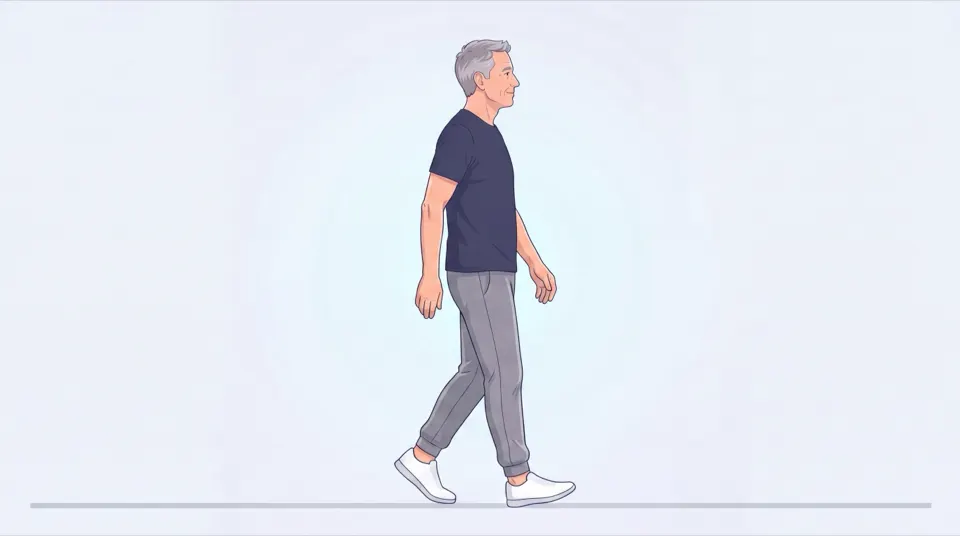
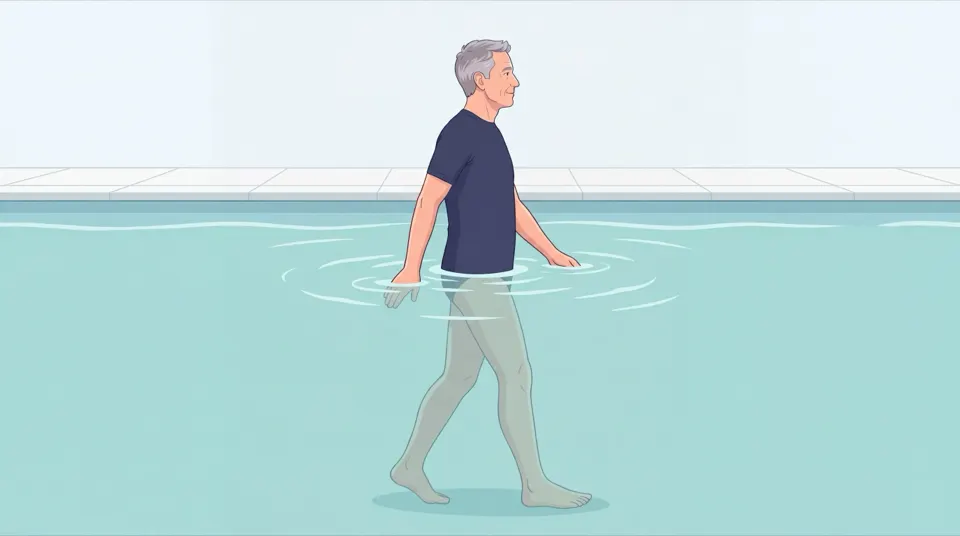
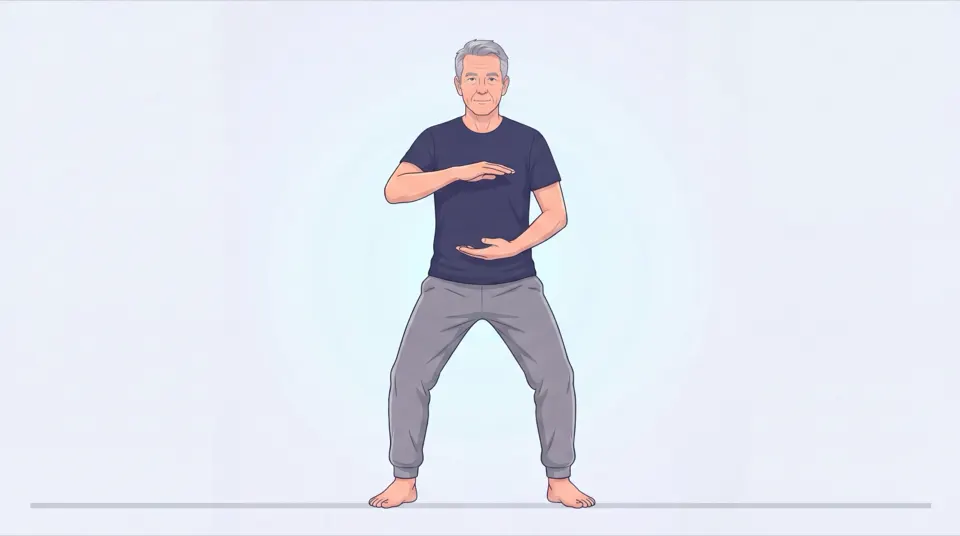
| D · whole body | Short walks | Longer walks · pool walking | Tai chi · yoga |
Your type is a place to start, not a diagnosis. Once you’re doing well, branch out to other exercises.
Type A: bending backward
Level 1
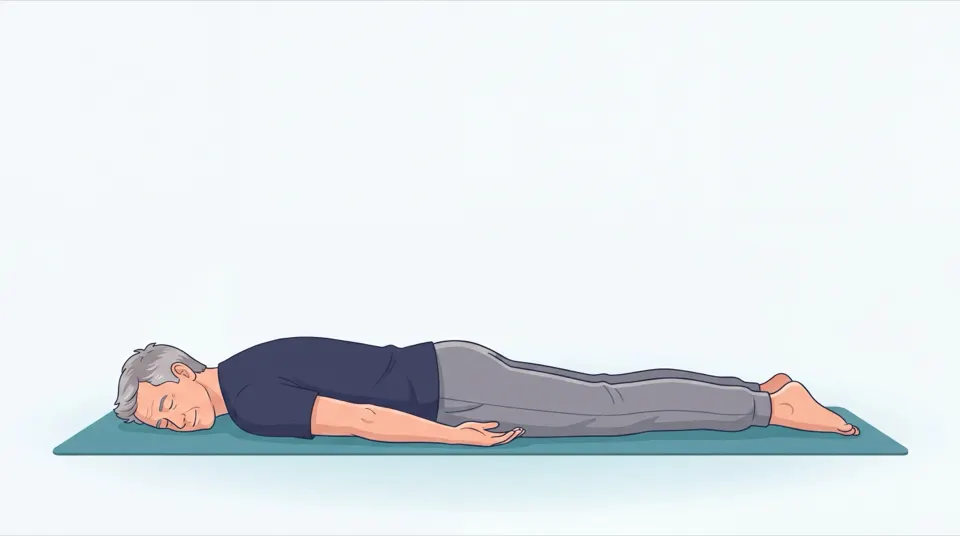
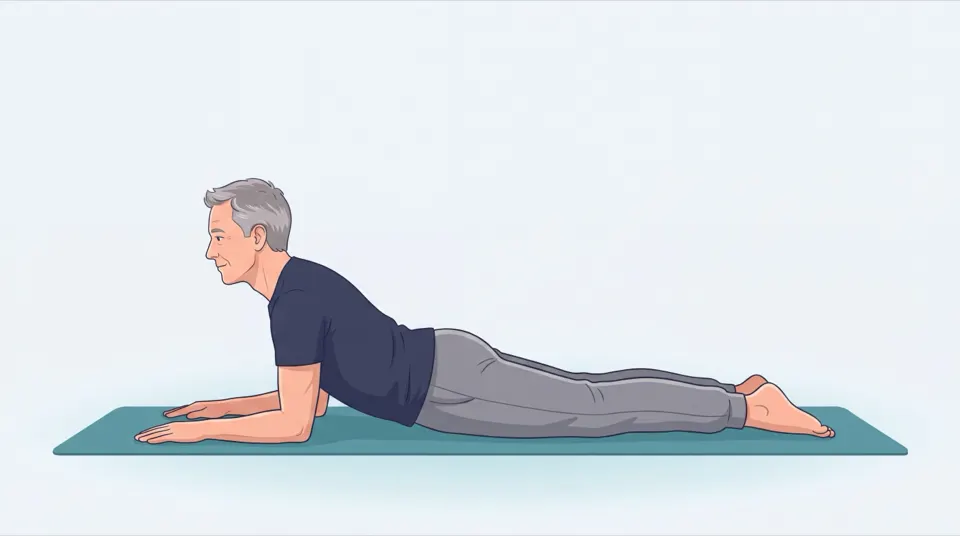
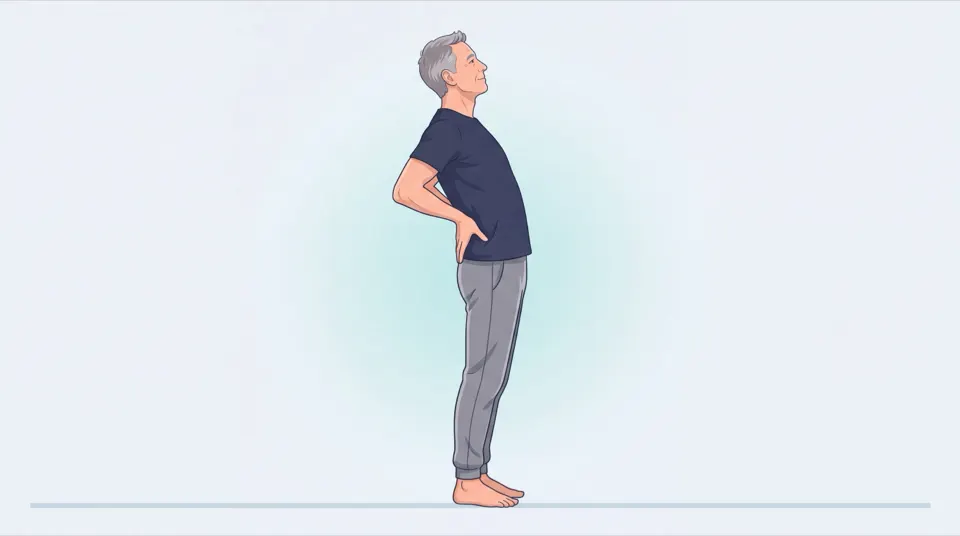
Level 2
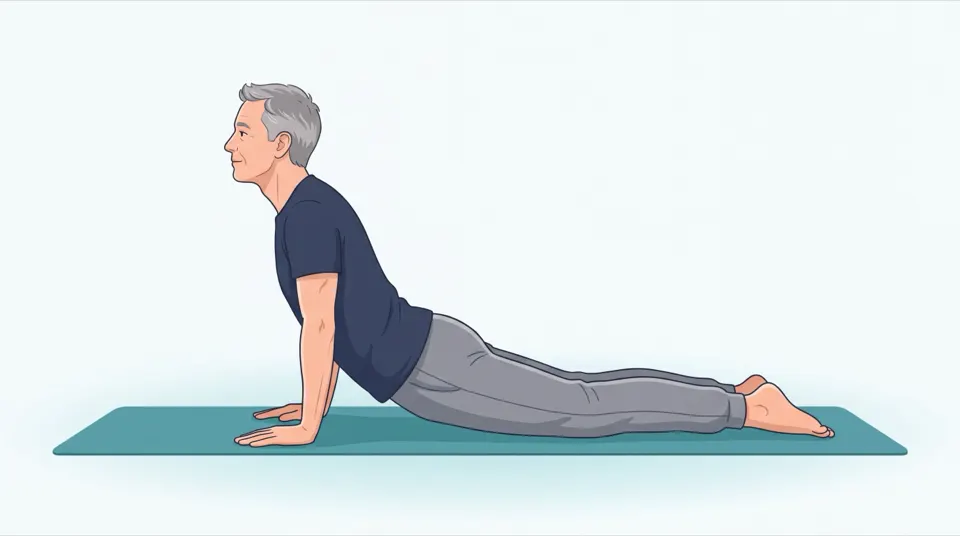
Level 3
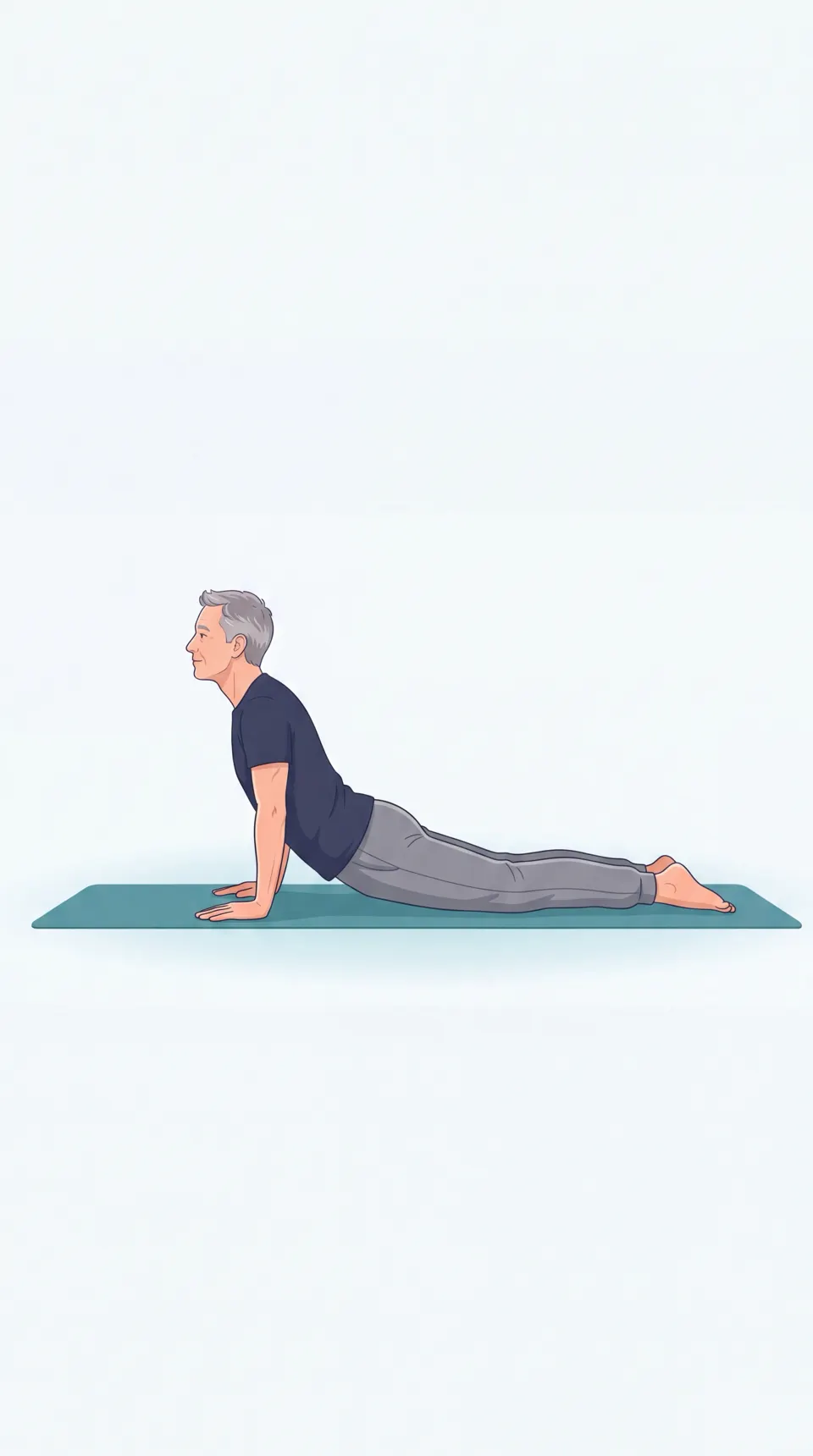
These numbers are a sensible starting point. No trial has tested exactly how long to lie or how many press-ups to do.
Bending backward narrows the spinal canal, and you can measure it on MRI. If leaning back sends pain down your leg, stop. Bending back isn’t your direction.
Type B: rounding forward
This is the type most people with spinal stenosis fall into, because rounding forward opens the canal. If walking gives you leg pain that eases when you lean on a shopping cart, start here.
Level 1
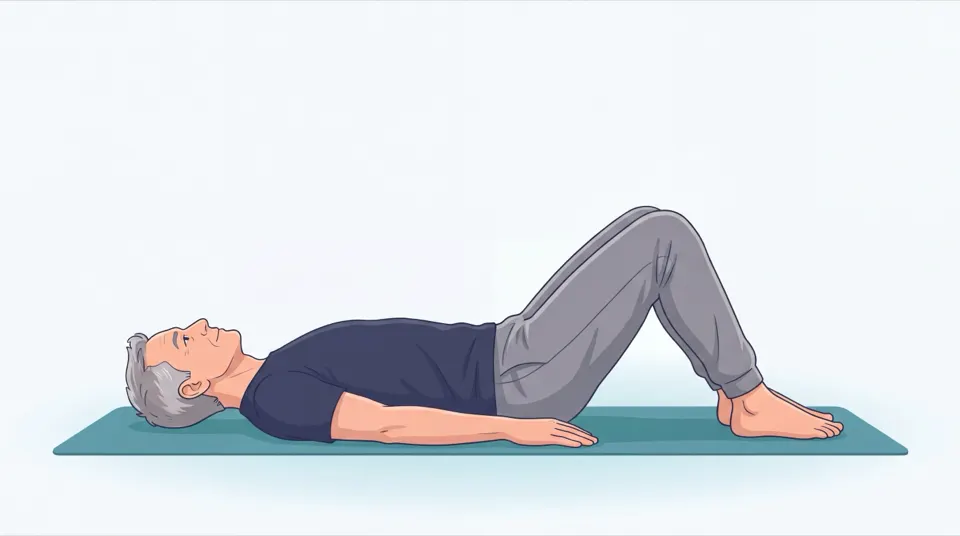
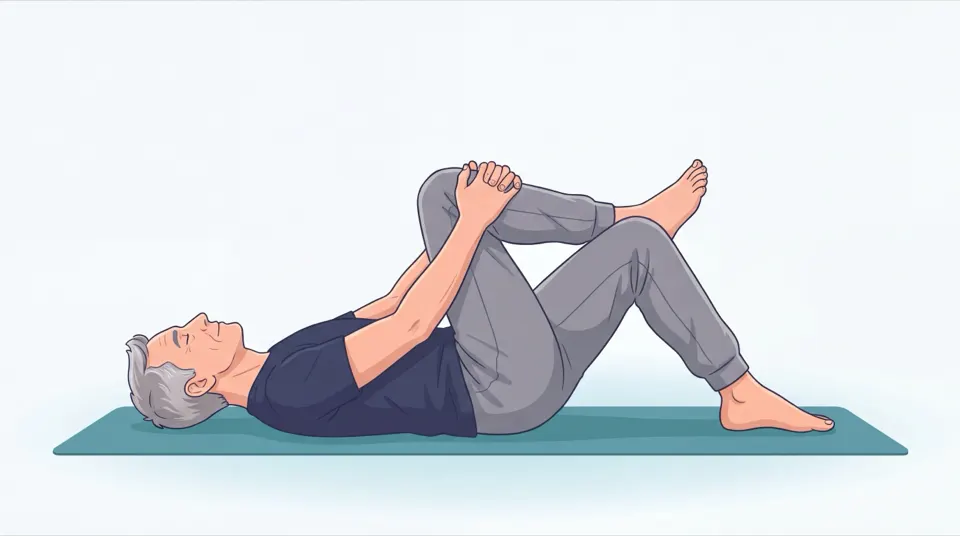
Level 2
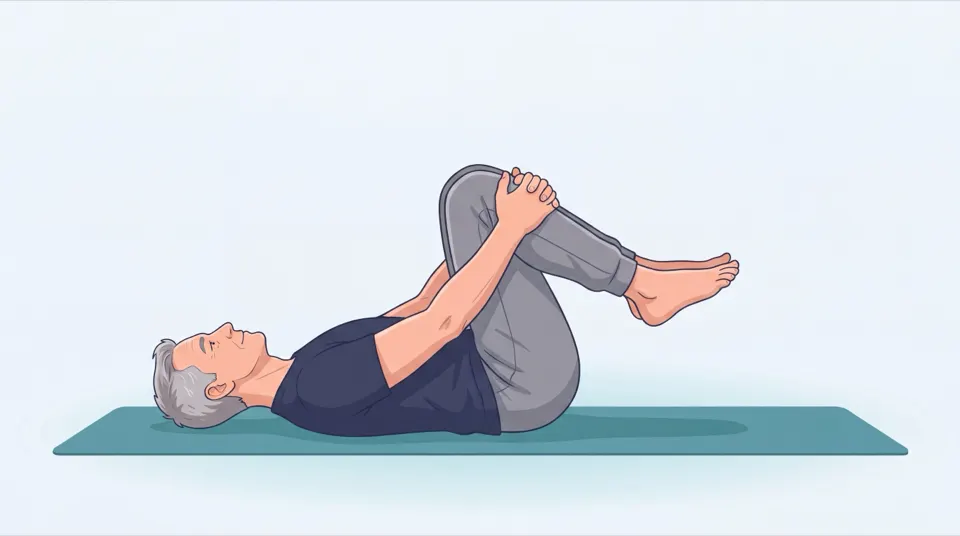
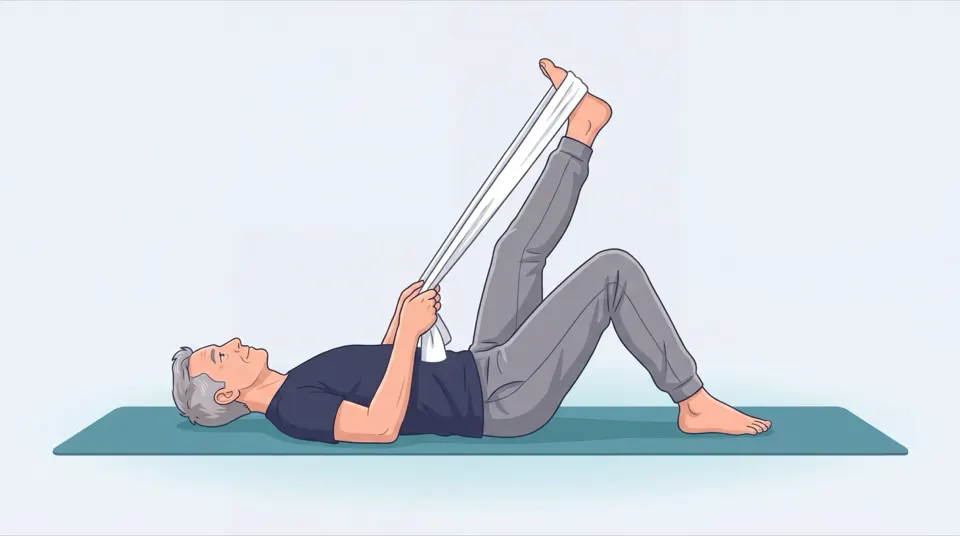
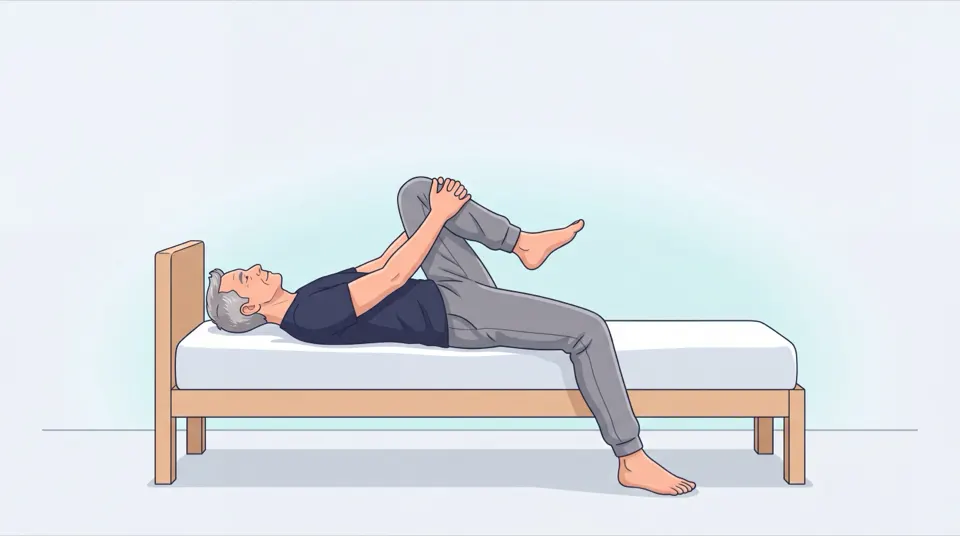
Level 3
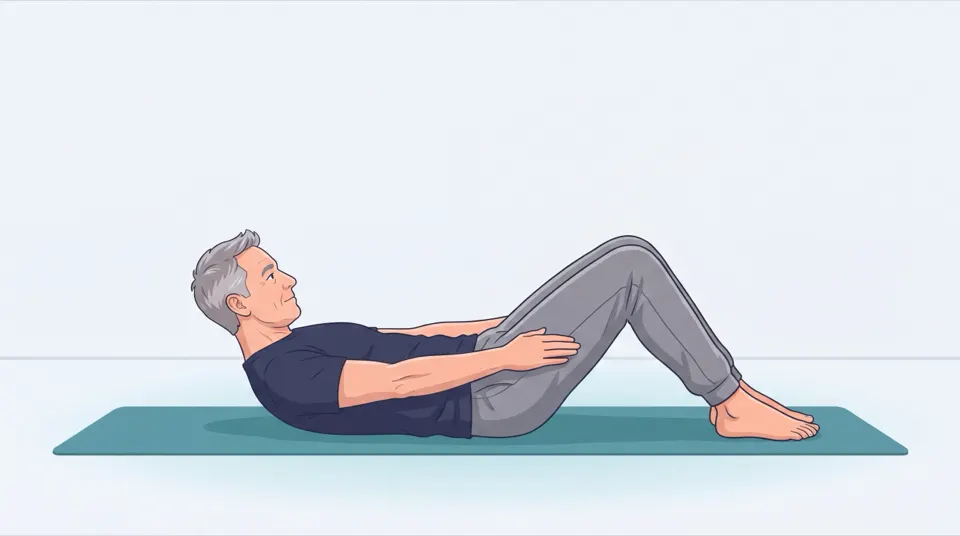
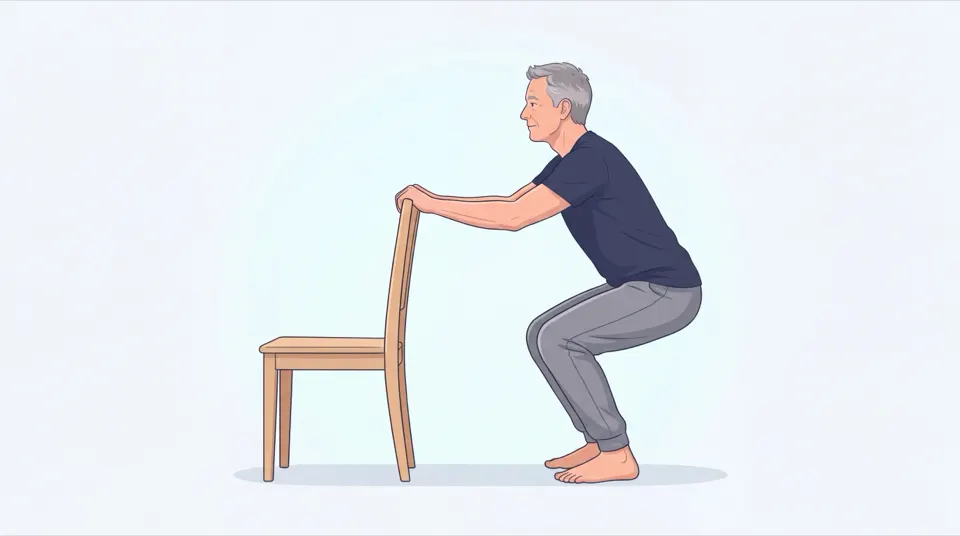
Osteoporosis or a past spine fracture: be careful with this type. In a small, old, non-randomised study, new spine fractures were more common with forward-bending exercises. Better evidence shows that women who strengthened their back muscles had fewer spine fractures ten years later. So keep exercising, skip deep or forceful forward bending like sit-ups and hard knee hugs, and talk to your doctor first.
Type C: supporting your trunk (the McGill Big 3)
Level 1
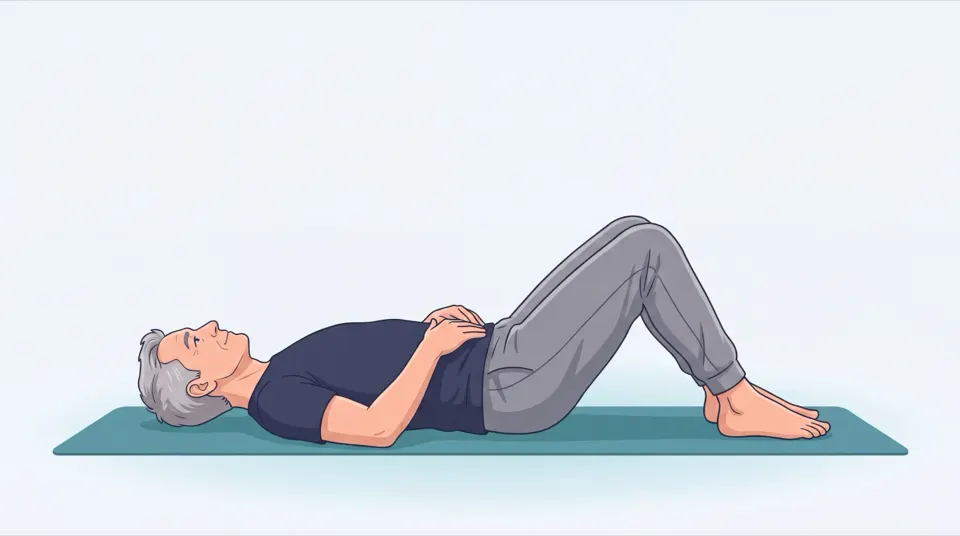
Level 2
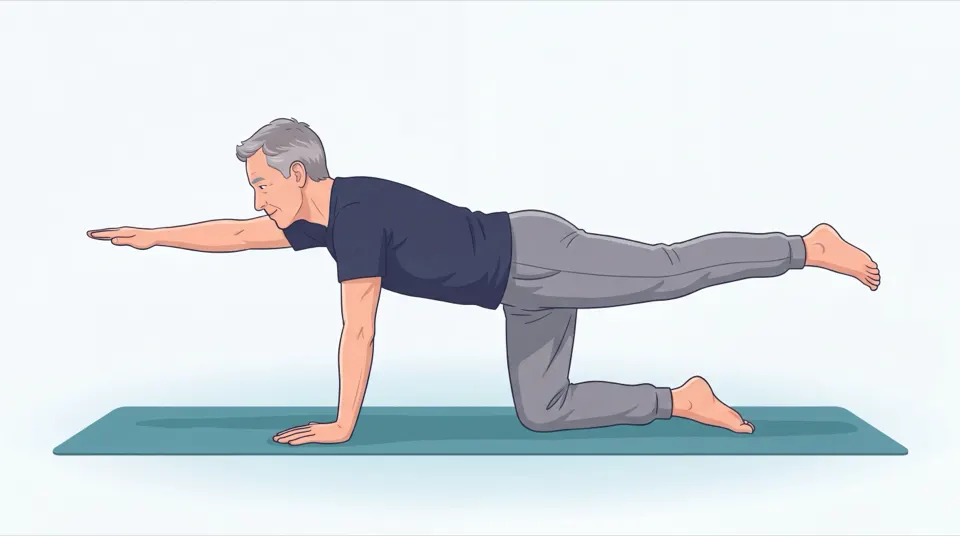
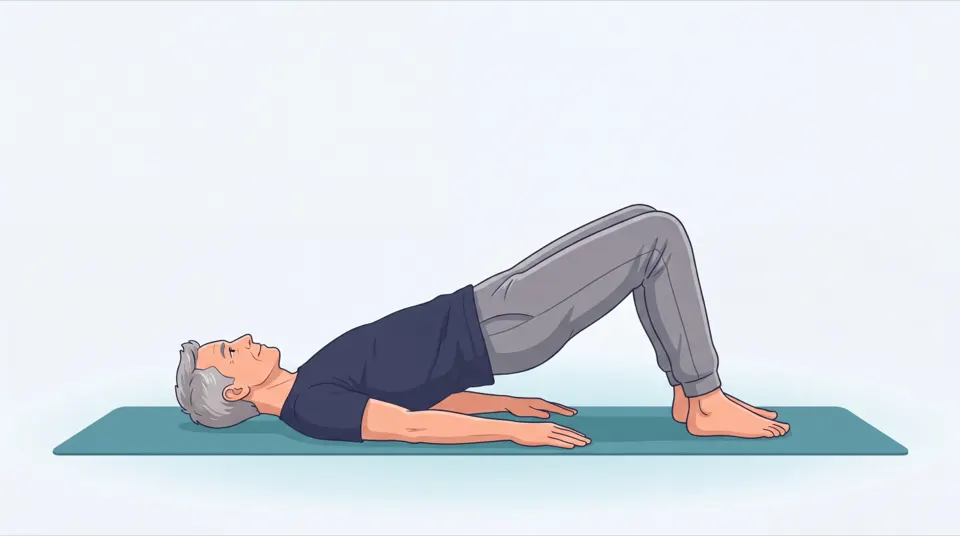
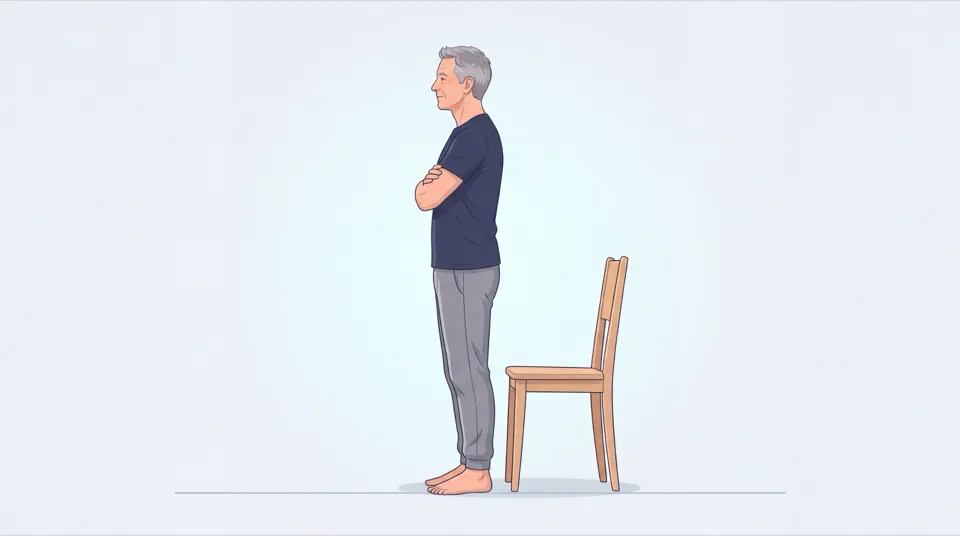
Level 3
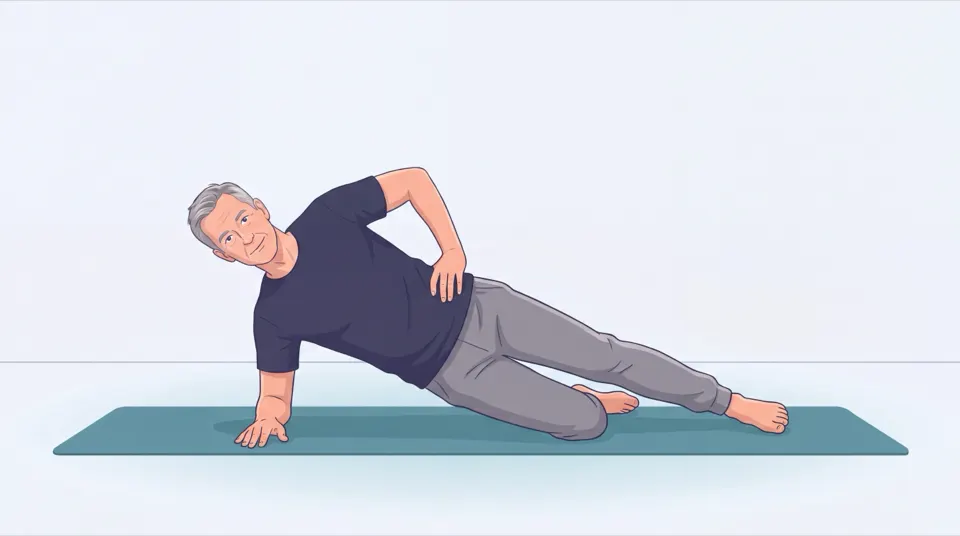
These three, the bird dog, the side plank and the curl-up, are what Dr. Stuart McGill calls the Big 3.
For what it’s worth, this is what I do myself: a short core-strengthening session, a mix of these exercises.
Type D: moving your whole body
When everything hurts, don’t hunt for the perfect exercise. Just move.
Older age, after surgery, or with a stimulator
If you’re over seventy-five, or worried about falling, hold on to a chair or a counter for anything standing. If getting down to the floor and back up is hard, don’t. Do everything on your bed.
If you’re older, exercise also prevents falls. A Cochrane review of more than a hundred trials, average age 76, found it cut falls by about a quarter.
After a fusion, your surgeon’s plan comes first. Walking starts almost right away. The bending and twisting exercises wait until your surgeon clears you.
With a spinal cord stimulator, skip big bends, twists and reaching overhead for the first two months, so the wires can settle in place. After that, most people can do everything on this page.
Bad days, and how long to give it
A little soreness that’s gone by the next morning is fine. Hurt isn’t the same as harm. If you’re clearly worse the next day, or the pain spreads down your leg, drop back a level. Level 1 is there for exactly those days.
Give it time. The programs that worked in trials ran six to eight weeks. Don’t judge it after a week.
If you can, have a physical therapist check your form. Supervised exercise does a bit better than exercising alone at home.
Does the type of exercise matter?
Less than you’d think. The same research group compared the types head to head across more than two hundred trials. Some came out a little ahead, but the authors’ own advice was simple: do the exercise you enjoy, because that’s the one you’ll keep doing.
Then why sort people into types? Because direction does seem to matter. In one trial, people whose pain clearly eased when they moved in one direction were given exercises in that direction, in the opposite direction, or with no direction. The matched group did better on every measure. About a third of the others dropped out within two weeks because they weren’t getting better, or felt worse.
Now the other side. That effect is clearest in newer back pain. In a Dutch trial of people whose pain had lasted months, sorting them into types did no better than ordinary physical therapy.
So find the direction that feels better. Start at Level 1, even if you feel you could do more. Move up after a week if you’re no worse. And keep going. Doing it regularly matters more than which exercise you pick.
Sources
Exercise eases chronic low back pain more than no treatment, usual care or placebo. The effect on pain is clinically important; the effect on function is smaller.
249 trials. Pain: mean difference −15.2 on a 0–100 scale (moderate certainty), a clinically important difference. Function: −6.8, below the threshold for a clinically important difference.
Hayden JA, Ellis J, Ogilvie R, et al. Exercise therapy for chronic low back pain. Cochrane Database Syst Rev. 2021;9(9):CD009790. PubMed 34580864 · DOI
Some exercise types came out ahead, but the authors advise doing the exercise you enjoy, to keep doing it.
217 randomised trials, 20,969 people. Pilates, McKenzie therapy and functional restoration did best; conclusion: people “should be encouraged to perform the exercise that they enjoy to promote adherence.”
Hayden JA, Ellis J, Ogilvie R, et al. Some types of exercise are more effective than others in people with chronic low back pain: a network meta-analysis. J Physiother. 2021;67(4):252-262. PubMed 34538747 · DOI
Exercising in the direction that eases your pain did better than the opposite direction or no direction.
A directional preference was found in 74% (230). Matched exercise did better on every outcome; one third of the opposite and non-directional groups withdrew within 2 weeks for no improvement or worsening, and no matched subject withdrew.
Long A, Donelson R, Fung T. Does it matter which exercise? A randomized control trial of exercise for low back pain. Spine. 2004;29(23):2593-2602. PubMed 15564907 · DOI
In subacute and chronic back pain, sorting people into types did no better than usual physical therapy.
156 patients. No statistically significant differences between the groups for any outcome at 8, 26 or 52 weeks.
Apeldoorn AT, Ostelo RW, van Helvoirt H, et al. A randomized controlled trial on the effectiveness of a classification-based system for subacute and chronic low back pain. Spine. 2012;37(16):1347-1356. PubMed 22333955 · DOI
Bending backward narrows the spinal canal.
Upright MRI in healthy volunteers: canal area at disc level 268 mm² bent forward vs 224 mm² bent back (p < .0001).
Schmid MR, Stucki G, Duewell S, et al. Changes in cross-sectional measurements of the spinal canal and intervertebral foramina as a function of body position: in vivo studies on an open-configuration MR system. AJR Am J Roentgenol. 1999;172(4):1095-1102. PubMed 10587155 · DOI
In osteoporosis, forward-bending exercise was followed by more new spine fractures (a small, non-randomised study).
59 women with postmenopausal spinal osteoporosis, assigned to extension (25), flexion (9), combined (19) or no exercises (6). New fractures were significantly more frequent with flexion than with extension. The groups were small and not randomised, so read it as a caution, not a measured risk.
Sinaki M, Mikkelsen BA. Postmenopausal spinal osteoporosis: flexion versus extension exercises. Arch Phys Med Rehabil. 1984;65(10):593-596. PubMed 6487063
Women who strengthened their back muscles had fewer spine fractures ten years later.
Vertebral compression fractures: 4.3% of vertebrae in the control group vs 1.6% in the back-exercise group; relative risk 2.7 times greater without the back exercises.
Sinaki M, Itoi E, Wahner HW, et al. Stronger back muscles reduce the incidence of vertebral fractures: a prospective 10 year follow-up of postmenopausal women. Bone. 2002;30(6):836-841. PubMed 12052450 · DOI
In older people, exercise cut falls by about a quarter.
108 randomised trials, 23,407 people, average age 76. Exercise reduced the rate of falls by 23% (rate ratio 0.77; high-certainty evidence).
Sherrington C, Fairhall NJ, Wallbank GK, et al. Exercise for preventing falls in older people living in the community. Cochrane Database Syst Rev. 2019;1(1):CD012424. PubMed 30703272 · DOI
Some pain during exercise need not stop you.
Chronic musculoskeletal pain, 7 trials. Painful exercise had a small short-term benefit over pain-free exercise and no difference later; “pain during therapeutic exercise … need not be a barrier to successful outcomes.”
Smith BE, Hendrick P, Smith TO, et al. Should exercises be painful in the management of chronic musculoskeletal pain? A systematic review and meta-analysis. Br J Sports Med. 2017;51(23):1679-1687. PubMed 28596288 · DOI
Programmes that worked ran six to eight weeks (stenosis: 6 weeks).
Lumbar spinal stenosis: supervised physical therapy twice a week for 6 weeks did better than home exercise on symptoms, function, walking distance and leg pain.
Minetama M, Kawakami M, Teraguchi M, et al. Supervised physical therapy vs. home exercise for patients with lumbar spinal stenosis: a randomized controlled trial. Spine J. 2019;19(8):1310-1318. PubMed 30986577 · DOI
Programmes that worked ran six to eight weeks (older adults: 8 weeks).
184 adults, mean age 71, with chronic low back pain. The programmes ran 8 weeks; both hip-focused and spine-focused physical therapy produced clinically meaningful improvements in disability and function.
Hicks GE, George SZ, Pugliese JM, et al. Hip-focused physical therapy versus spine-focused physical therapy for older adults with chronic low back pain at risk for mobility decline (MASH): a multicentre, single-masked, randomised controlled trial. Lancet Rheumatol. 2024;6(1):e10-e20. PubMed 38258673 · DOI
Supervised exercise does a bit better than exercising alone at home.
43 trials. Individually supervised programmes improved pain by 5.9 points (0–100) compared with home exercise only.
Hayden JA, van Tulder MW, Tomlinson G. Systematic review: strategies for using exercise therapy to improve outcomes in chronic low back pain. Ann Intern Med. 2005;142(9):776-785. PubMed 15867410 · DOI
Disc wear and bulging discs are common on the MRIs of people with no back pain.
33 studies, 3,110 people without symptoms. Disc degeneration: 37% at age 20 to 96% at 80. Disc bulge: 30% at 20 to 84% at 80.
Brinjikji W, Luetmer PH, Comstock B, et al. Systematic literature review of imaging features of spinal degeneration in asymptomatic populations. AJNR Am J Neuroradiol. 2015;36(4):811-816. PubMed 25430861 · DOI